'Jack's Return Home' ('Get Carter'): A Review
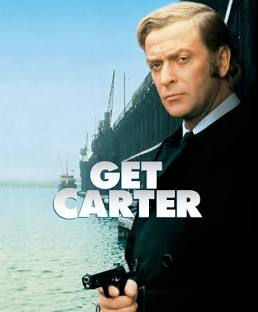
Despite having a pile of books to be read that threatens to topple over and crush me, I could not resist the recommendation of acclaimed author David Bowmore when it came to British author Ted Lewis’s 1970 novel, Jack’s Return Home.
It’s the original book behind the much better-known 1971 film adaptation, Get Carter. In fact, due to the movie’s success, the book was quickly retitled Get Carter.
British actor Michael Caine plays Jack Carter in the film, a totally ruthless gangster in a snappy suit and tie.
John Williams, author of The Cardiff Trilogy, describes Get Carter as “the finest English crime novel ever written.” Others credit it not only with influencing their work but also with kick-starting noir fiction in the UK.
Apparently, Ted Lewis wrote for television and penned some Doctor Who scripts back in the day. They were deemed too dark for the show and were never used, but, after finishing this novel, I think they’d be worth a look.
Get Carter is set in 1970: two brothers, Gerald and Les Fletcher, run a criminal ‘firm’ in London. Carter travels back to the unnamed working-class industrial town in northern England where he grew up to investigate the death of his brother, Frank. Drunk on whisky, Frank allegedly ran his car off a cliff. Carter is suspicious: his brother was not a drinker nor was he suicidal. As Carter speculates, “They hadn’t even bothered to be careful; they hadn’t even bothered to be clever.”
This is where we strike one layer that makes the book interesting: you might assume that Jack and Frank shared a loving relationship as brothers, which might be what fuels Jack’s brutally relentless quest for revenge, but we find out over the course of the novel that it wasn’t as simple as that: Frank actually resented his brother and at times the feeling was mutual. So what is it that drives Jack? What emerges, as he moves through the town like a juggernaut, is that Jack might actually, on some level, be seeking redemption.
Carter rips through the place and its people as he attempts to find out who and what led to his brother’s death. A particular target of his attention is Eric Paice, an enemy from his youth, who now works for local crime lord Cyril Kinnear. Other notable characters include Frank’s mistress, Margaret, and his brother’s teenage daughter, Doreen. They're all involved in something seedy; it’s also clearly implied that Doreen is actually Carter’s daughter, the result of a drunken fling with Frank’s then-wife - just one possible reason for the two brothers’ estrangement. Frank was law-abiding whereas Jack goes on to pursue a criminal life, which adds tremendous pathos to the story.
Another thing that adds depth is the sense of place, as seen here:
We were in the middle of a dozen blocks of tall council flats. They looked greyer than the day. We walked across a dull wet patch of grass and under one of the blocks, and turned left. There was a lift, one of those aluminium-finish things that always smell of piss. We got in. She pressed Four on the panel. She pushed her hands in to the pockets of her short artificial-fur coat and leaned back against the wall and looked at me. The door rattled shut and the lift moved. I threw my cigarette on the floor; the stink didn’t improve the flavour. The girl kept looking at me.
Mike Hodges, who directed the movie, writes in an introduction to the Syndicate Books rerelease: “It [the book] arrived in the post, out of the blue, along with an offer to write and direct it. Its literary style was as enigmatic as the manner of its arrival. Whilst set in England and written by an Englishman it was (aside from the rain) atypically English.” The grim industrial North was a different setting from that of most English crime fiction.
Carter’s character was another major element: cunning, savage, ruthless, exploitative, willing to use and sacrifice anyone to get what he wants, he’s cuckolding one of his bosses as he schemes to steal as much money as possible from them. Even Doreen, possibly his own daughter, doesn’t escape his ruthlessness:
“She was older than her fifteen natural years,” he thinks to himself at one point. “I could have fancied her myself if she hadn’t been who she was. You could tell she knew what was what. It’s all in the eyes.”
The books are full of bone-chilling remarks: the first-person narration and Carter’s straightforward observations and decoding of events create a sense of menace and claustrophobia:
“On the surface it was a dead town. The kind of place not to be left in on a Sunday afternoon.”
He continues:
“But it had its levels. Choose a level, present the right credentials and the town was just as good as anywhere else. Or as bad. And there was money. And it was spread all over because of the steelworks. Council houses with a father and a mother and a son and a daughter all working. Maybe eighty quid a week coming in. A good place to operate if you were a governor who owned a lot of small time set-ups. The small time stuff took the money from the council houses. And there were a lot of council houses. Once I’d scrawled for a betting shop on Priory Hill. Christ, I’d thought, when I’d happened to find out how much they took in a week. Give me a string of those places and you could keep Chelsea. And Kensington. If the overheads were anything like related to what that tight bastard I’d been working for was paying me.”
It’s like the reader has entered a kind of hell, perhaps the hell inside Jack’s head: police (or “the scuffers” as they are called) are almost completely absent or shown to be hopelessly incompetent in Get Carter. Carter loathes the place, but he is forced to investigate his own brother’s death, something the authorities have failed to do.
Social changes were underway in Britain as the 1960s came to an end. As Hodges writes: “Britain in the ’60s was, for some of us, a hopeful and exciting time when radical ideological dreams seemed realisable. We were fooling ourselves. The fault line of class and privilege fracturing British society […] proved impossible to breach. By the time Ted’s book was published those delusional dreams had evaporated.”
As the austerity of the postwar years faded away a new middle class was growing, but slowly, and like weeds: working class pubs and bedsits, back alleys and the wasteland around steelworks form a dismal backdrop for the action.
When Carter follows Paice to the casino run by Paice’s employer, Kinnear, he quickly analyses the clientele, farmers, owners of chains of cafés, contractors, builders:
I looked around the room and saw the wives of the new Gentry. Not one of them was not overdressed. Not one of them looked as though they were not sick to their stomachs with jealousy of someone or something. They’d had nothing when they were younger, since the war they’d gradually got a lot, and the change had been so surprising they could never stop wanting, never be satisfied.
Get Carter the book differs significantly from the film. Hodges, who wrote the script, kept the narrative spine of Lewis’s book and much of the dialogue, but jettisoned most of Carter’s backstory and changed other key elements of the novel, centring it in Newcastle. Whereas Carter’s fate in the book remains inconclusive, in the film he dies, killed by a hit man, presumably hired by the Fletchers, whom we glimpse traveling in the same train carriage as Carter in the film’s opening scenes.
Perhaps the film is even colder and bleaker than the book, as Hodges says: “The poverty and depravation I witnessed in those hell holes blew the scales off my bourgeois eyes forever. From now on I would be no stranger to the sleazy milieu Ted’s novels occupied.”
But the book’s straight talking and memorable phrases cut through any kind of romanticism to the bricks underneath. Though its ending is untidier than the film, it’s worth a read if you want a cold shower to wake you out of the soft place the world has become.
Comments